
We're Live on BNB Chain: Launch a Token With PancakeSwap Infinity Hooks
Runitup is now live on BNB Chain. Launch your own coin in about a minute for less than a dollar, on PancakeSwap Infinity, with a hook that pays your fees in BNB automatically.
Tagged guides · show all
Runitup is now live on BNB Chain. Launch your own coin in about a minute for less than a dollar, on PancakeSwap Infinity, with a hook that pays your fees in BNB automatically.
Nine launchpads are live on Robinhood Chain. Here is how they compare on the model, the creator's share, where the liquidity goes and how creators get paid, with every figure taken from the platforms' own docs.
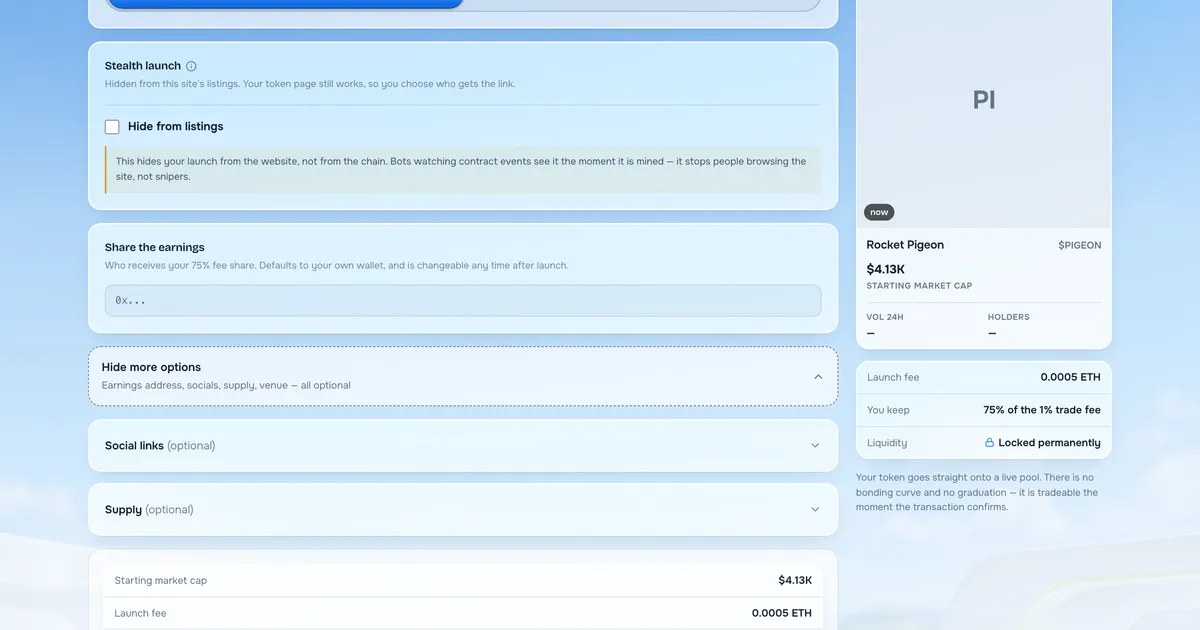
Every field on the Runitup launch form, what it does, and what happens if you get it wrong. Real screenshots of each setting, and a clear list of what is permanent and what you can change later.
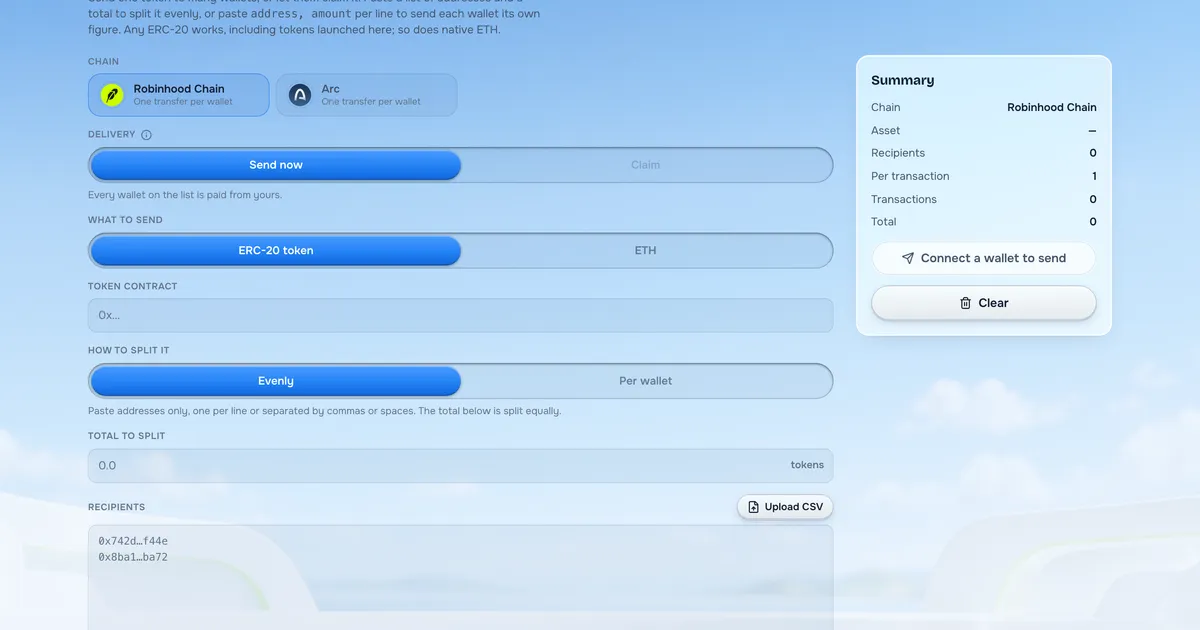
Paste a list of wallets, say how much to send, confirm. Here is every screen of the Runitup airdrop page in real screenshots, including the warning in the summary that decides how long a big airdrop takes.
A hook is a small program that runs every time somebody trades. Here is what they are actually used for, why most pools including ours run without one, and how a dishonest one can stop you selling.
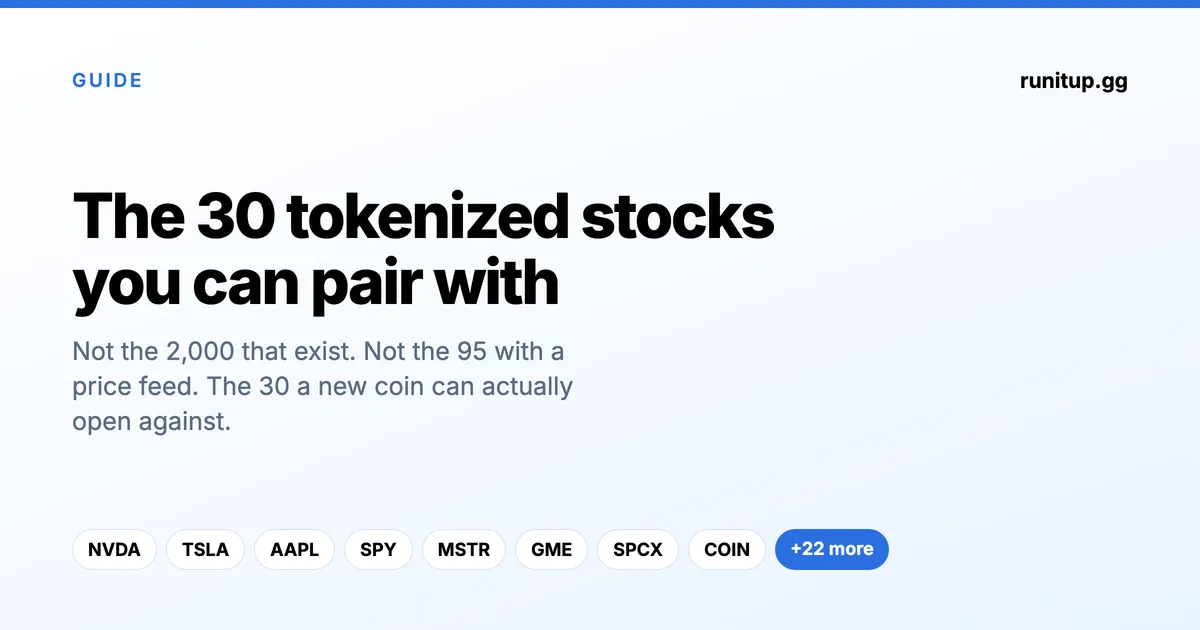
Page one cannot agree whether the number is 95 or 2,000. Neither answers the question a creator actually has: which ones can I open a pool against? Here are the thirty, and what a stock pair does to your coin.
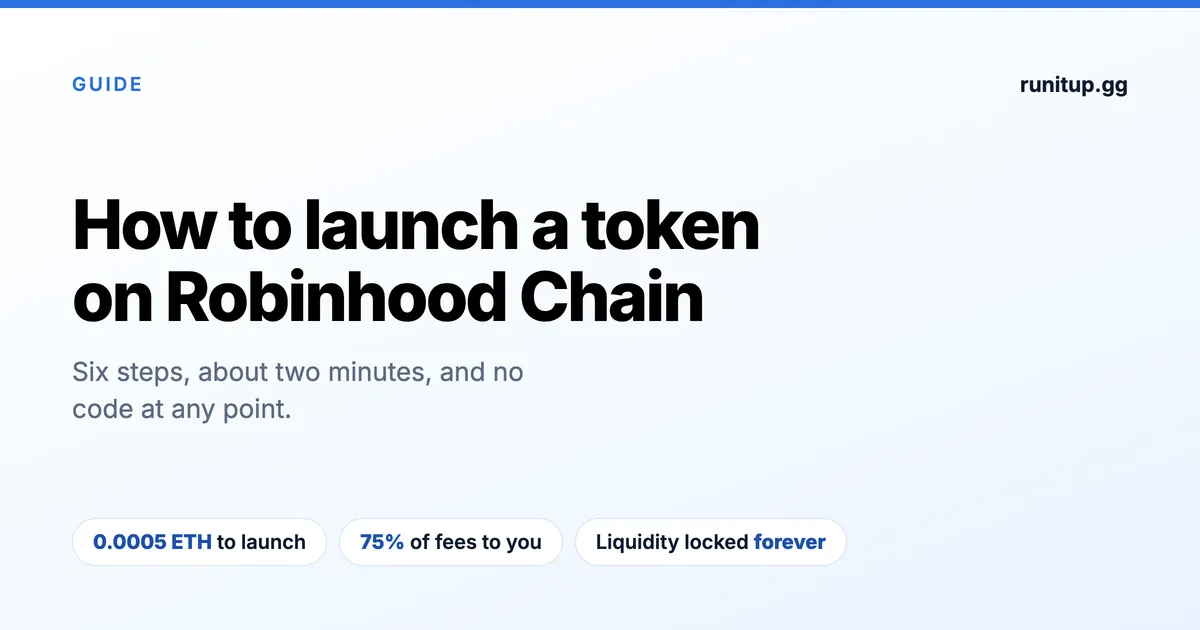
No code, no waiting list, no permission needed. Here is what a launch costs, what you need in front of you, the six steps themselves, and the mistakes that cost people money afterwards.
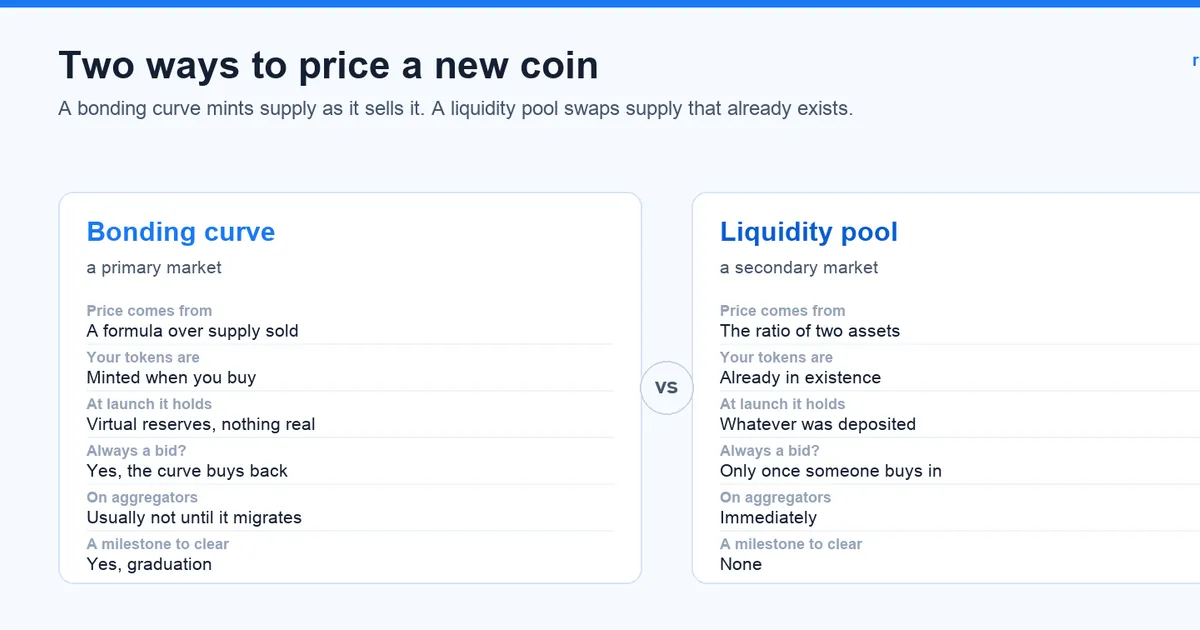
A bonding curve mints supply as it sells it; a liquidity pool swaps supply that already exists. Here is what actually differs, and why only 0.63% of curve launches ever graduate.
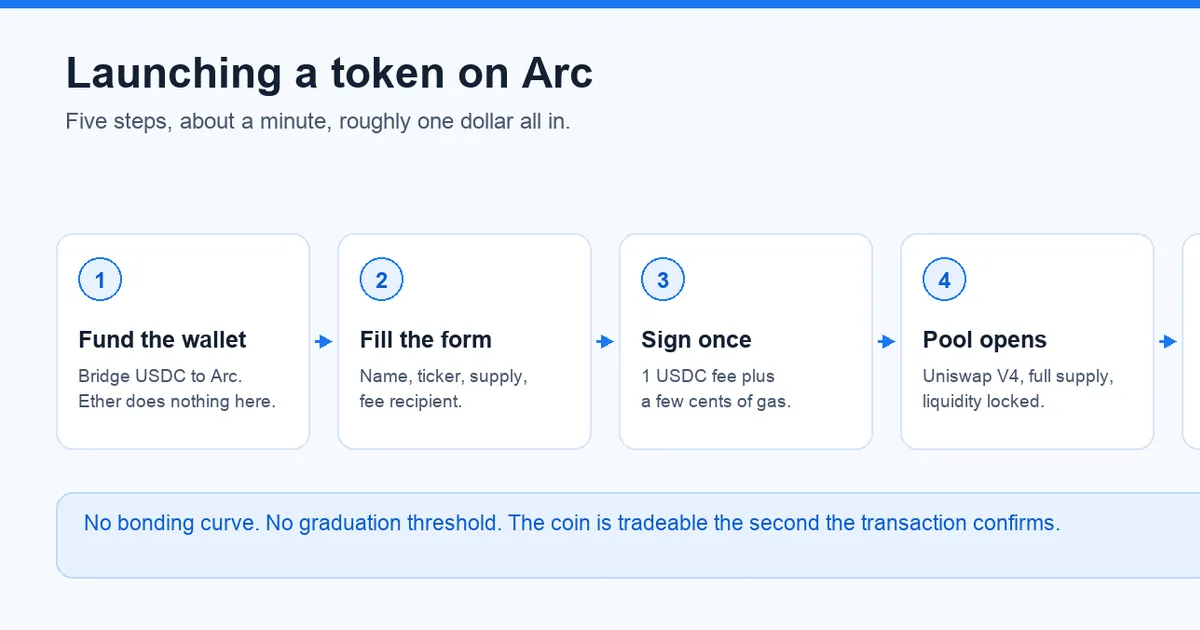
Arc mainnet is live, gas is paid in USDC, and a launch costs about a dollar. Here is the wallet setup, the five steps, what it really costs, and the two Arc traps that catch people afterwards.